
A Case For Cold Showers (by someone who HATES the cold)
Aka: The benefits of cold exposure in early sobriety
Information provided is for educational purposes only and should be used in conjunction with the guidance and care of your physician or medical provider.
Ok so, here’s the thing:
I like being comfortable.
I like soft clothing and cozy slippers.
I always carry snacks because gawd forbid I get hungry.
If I could, I’d avoid awkward social interactions. [wouldn’t we all?] 😅
And I don’t like the temperature when it’s too hot or too cold… the window is quite narrow for what qualifies as “good weather” in my book.
So, when I was in the early days of re-defining my relationship with alcohol [and feeling kinda down], and someone suggested adding cold showers to my routine… I was like, uh… hard pass.
That sounded like a big dose of literal discomfort and 100% not my thing.
Feeling down without alcohol
It’s a common experience for most people when they take a break from drinking alcohol – regardless if their goal is to cut back or cut it out altogether – to go through what feels like a “dip” in mood.
This isn’t “sadness” or the sign of someone who is “missing” their good buddy alcohol… but rather a side-effect of the chemical-chain-reaction that alcohol causes in the body.
Because alcohol triggers an unnaturally high spike of dopamine in our systems, over time (with enough exposure) our brain starts to close off some of our receptors to keep us safe.
You can think of it like our brain turning the volume down on dopamine so we don’t blow our speakers.
What this means for us, when we remove alcohol from the equation, is that we’re living in what’s called a “dopamine trench” for a period of time… deprived of the gigantic spikes in dopamine and the volume turned so low in our brains that other sources of more natural spikes simply don’t register.
This creates a lull… low mood… low motivation… general feeling of “blah” (or in some cases can mimic the sensations of legitimate depression).
Resetting to our “factory settings”
The good news?? These human bodies are incredibly resilient… and as soon as you take alcohol out of the picture, your body & mind leap into action, repairing all sorts of systems, hormones, organs, you name it!
And after what is actually a short period of time for most of us [all things considered], your dopamine receptors will re-set back to natural baseline levels…
What I like to call your “factory settings.”
Support in the meantime
BUT. In the meantime… before your system has completed its reset… you’re still living in bummer town, right? And you deserve a boost.
Please see this other article for more general tips to support dopamine production and continue reading below to open your mind to the possibility of taking a cold shower for a substantial boost in mood.
(…even if you hate the cold like me.)
👇👇👇
Cold shower benefits (backed by science)
Slow, sustained dopamine boost (without the crash):
Cold exposure has been shown to increase dopamine levels by up to ~2.5x baseline, with effects that can last for hours — without the sharp spike-and-drop cycle associated with alcohol or sugar.
Mood elevation + reduced depressive symptoms:
Regular cold exposure may support improved mood by stimulating the release of norepinephrine and endorphins — key players in focus, energy, and emotional regulation.
Improved stress resilience:
Cold showers act as a controlled stressor, helping train your nervous system to stay calm under pressure. Over time, this can increase your tolerance for discomfort — hugely valuable in early sobriety.
Increased metabolism:
Research highlighted by Susanna Søberg shows that cold exposure can activate brown adipose tissue (“good fat”), which helps regulate body temperature and support metabolic health.
Enhanced energy and alertness:
The cold shock response increases heart rate and oxygen intake, leading to a natural, caffeine-free energy boost.
Nervous system regulation:
Alternating between stress (cold) and recovery helps improve autonomic flexibility — making it easier to move out of “fight-or-flight” and into a more balanced state.
Cold showers for beginners
HOW do we convince ourselves to do it!?
I’ll tell you what I did (and still do):
Brief reminder that I am not a physician or even a trained expert in this area. I have simply listened to the experts, experimented with trial & error, and compiled my own preferences below. Please consult a healthcare professional before attempting cold exposure, as there can be serious risk.

1. Start with a normal, warm shower – take care of all your usual washing & rinsing activities
The benefit of this warm-to-cold exposure both feels easier to me, and it also ensures that your core body temperature is nice and warm before you step into the cold.
This protects your organs and other vitals.
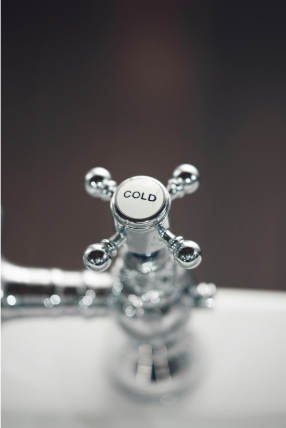
2. Step out of the water – crank it to cold (or cold-ish)
The water doesn’t need to be frozen or icy. The goal here is to find a temperature that feels “uncomfortable” but safe.
Like you want to get out but you’re not risking hypothermia or shock.
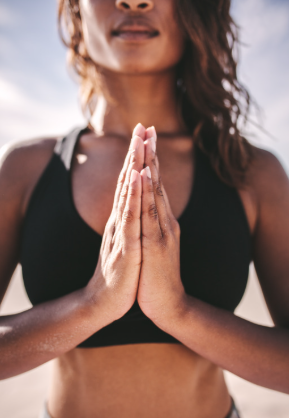
3. Set your intention, take some deep breaths – psych yourself up!
This really matters! If we tell our brain ahead of time “this is gonna be good,” “this is gonna make us feel better,” “I can do this,” “this is resilience training”… it helps provide the mental framework to steer the experience towards the positive.
And taking a few deep breaths helps to prime both our mindset and our nervous system for the “shock.”
Optional: Start your timer – if you have a waterproof option
I don’t use a timer, but just roughly count in my head.
This is quite the challenge at the start of this practice because it’s hard to focus and count and breathe all at the same time… but this gets easier. 😉

4. Acclimate your extremities – start with hands & feet
There’s no need to submerge your full body under the frigid stream all at once. Eventually, folks who are really acclimated to the cold may choose this approach, but really, it’s not necessary to achieve the benefits.
Continuing to breathe deeply -- I start by putting my right hand into the cold water for a second, then my left.
Right foot in, then my left.
Back to my hands, I put them both into the stream and start to gently splash the cold water on my forearms – right, then left.
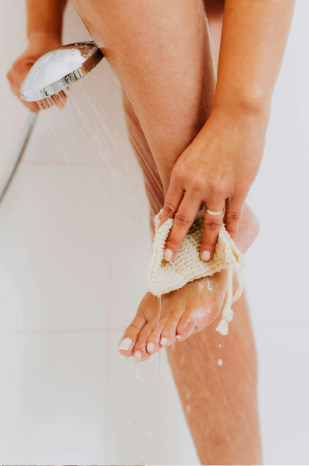
Splash right leg, then left.
Still remembering to breathe – in through the nose, long slow exhale through the mouth – I then splash water on my stomach and torso before slowly stepping into the cold stream and letting it hit my front.
Moving the whole time like a cartoon taking a shower – I’m splashing water on my shoulders, my face, letting some of the water splash over to my back…
Then I slowly turn to let the water hit the back of my legs – still cartoon washing, I’m moving the whole time – this helps with acclimation and also to achieve the physiological benefits I’m looking for.
Once I’ve acclimated my whole back to the cold, I turn around again to the front – still splashing and moving.
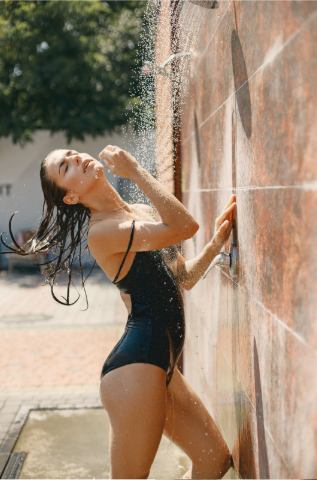
5. Full body exposure – keep breathing
Now that my full body is acclimated and exposed to the cold, I start to enjoy the sensations. It feels like swimming in a cold pool or a lake… refreshing and invigorating!
I rotate back to front a few times, continuing my deep breathing, until I’ve counted to my target number (or my timer goes off).

PLEASE NOTE: I never completely dunk my head.
Even though I allow the cold water to hit my face and neck, I personally never submerge my entire head under the cold. Others do, but I haven’t found it necessary to get the benefits I’m looking for.
Submerging your head speeds the rate that your core temperature cools – which amps up the negative risk factors. I don’t do it.

6. CELEBRATE – the party continues
Turn off the water, step out, dry off… and smile! Maybe do a little happy dance or high-five yourself in the mirror! Whatever feels right to you, just have a little moment of celebration.
You just did something bad@ss and brave! 😎
BONUS/ Confession:
I used to be a total baby when it came to getting out of the warm shower and into the colllllld air. I’d have a heater set up and dry off as quickly as possible to minimize the shiver…
BUT. Now. After ending my normal warm shower with a cold, bad@ss blast, I just step confidently out into the air! [Which actually feels warm and comfortable afterwards… AND even if it still feels a bit chilly, I give that feeling a purpose because I know it’s just extending the benefits of my cold exposure.]
Win/win/win.
Cold shower timing
It’s totally ok to start with just a few seconds and work your way up.
I started with 15 seconds, moved up to 30, and now can easily stay in the cold water for a couple of minutes.
The recommended exposure is about 11 minutes a week, broken down into small bits.
In fact, short little stints in the cold will give you more of the positive benefits, when long, extended exposure has a greater risk of the negative.
So there’s nothing weak about little 30-second cold bursts! They may even be the smartest way to go.
The Bottom Line:
Cold showers are a powerful, accessible tool.
In the early days of reducing or removing alcohol, your brain is recalibrating. Dopamine systems are resetting, and that temporary “blah” feeling is part of the process… not a sign of failure.
Cold exposure offers an accessible way to support that process by helping your body to produce its own natural mood-boosting chemicals → without the spike-and-crash cycle of drinking.
You’re not trying to shock your system. You’re simply giving it a small, controlled challenge and letting your body do what it’s designed to do:
Adapt. Recover. Rebalance.
Additional Tips:
Morning > Evening:
Cold exposure can be energizing and may interfere with sleep if done too late in the day. Earlier is usually better.Stack it wisely:
Pairing a cold shower with other habits (like a walk, sunlight, or hydration) can amplify the overall mood boost. See this article for more suggestions.Caffeine awareness:
Combining cold exposure with caffeine can feel great, but may also heighten jitters or anxiety for some people. I invite you to experiment and find your balance.Empty stomach (optional): Many people find cold exposure feels easier and more effective before eating, but this isn’t a strict rule.
Consistency beats intensity:
You don’t need extreme cold or long durations. Short, regular exposure (like 30 seconds) can be incredibly effective.Listen to your body:
Discomfort is part of the process, but pain, dizziness, or numbness is not. Always prioritize safety and consult a professional if you have underlying health conditions.
Disclaimer:
Information provided is for educational purposes only and is not intended to diagnose, treat, cure, or prevent any disease. Information provided is in no way intended as medical advice, substance abuse counseling, psychological counseling, or as a substitute for medical or any other professional counseling. This information should be used in conjunction with the guidance and care of your physician or medical provider.
If drinking less feels harder than you’d like it to...
It’s not because you’re doing something wrong.
It’s not because you lack discipline…
It’s probably just that your brain has adapted to a pattern of artificial highs, and it just needs some time to learn a more sustainable rhythm.
You’re not behind. You’re recalibrating.
And when you start working with that process… supporting your brain instead of fighting against it… that’s when things begin to shift.
I’ve got your back:
If you’re ready to learn a science-backed method to drink less — without feeling deprived or white-knuckling with willpower:
That’s exactly what I help my clients do.
👉 Roll up your sleeves and get started with my 6-week RESET.
👉 Or, if you're not sure where to start, book a free consultation for a no-pressure chat.
I’m here.
💗
